Blended Value Group (New York)
Over 30 years in the arena of purpose driven capital.

Aurora Advisory (Saudi Arabia)
Over 30 years across philanthropy, expert across the MENA region.
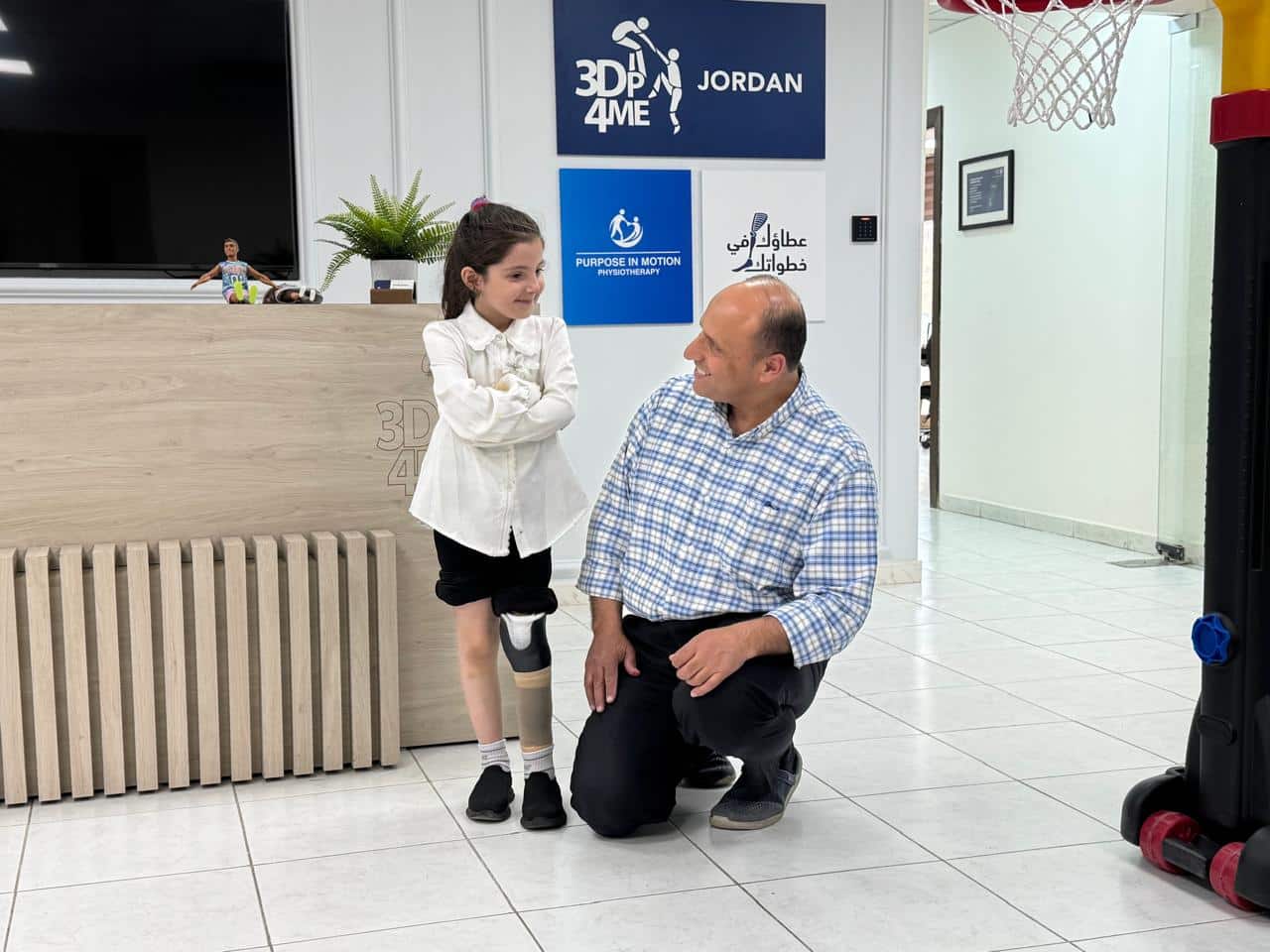
A child who loses a leg to a blast, or who is born unable to hear, faces a problem that holistic innovative healthcare can solve and logistics often can’t. A well-fitted prosthetic limb or hearing aid is not a one-time purchase. Children grow, devices wear out, and the fittings, adjustments and follow-up that make a device useful are scarce wherever clinics have been damaged, cut off or never built. For many families in Syria, and for refugee families in Jordan, the device is not the hardest part. Everything around it is.
That gap is where 3DP4ME works.
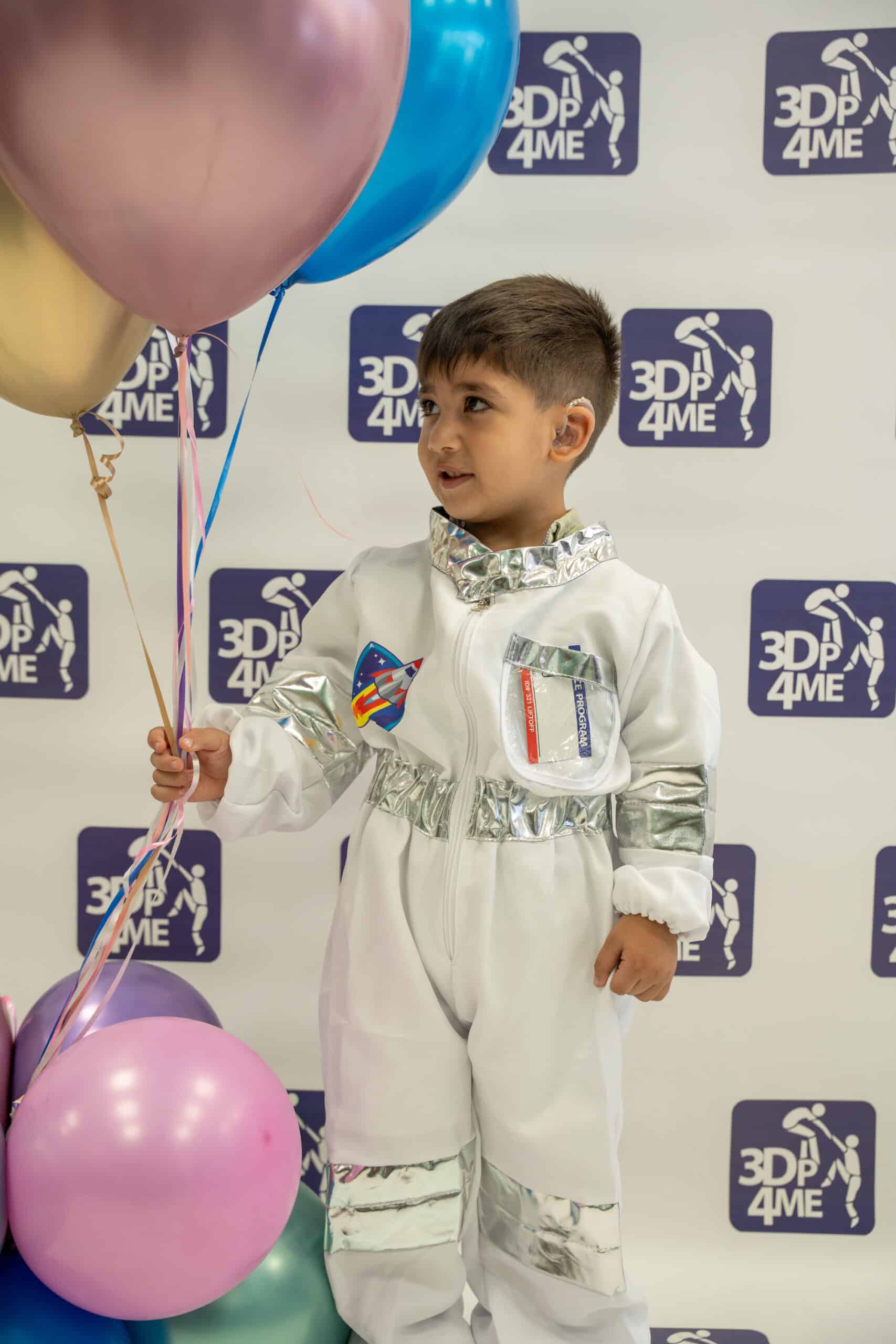
3DP4ME is a nonprofit that uses 3D scanning and additive manufacturing to produce custom prosthetics and hearing-aid earmolds closer to the children who need them. A limb or ear is scanned (for limbs, sometimes with a smartphone), the design is prepared digitally, in some cases remotely, and the device is printed locally. Because scanning, design and manufacturing can be separated, specialist expertise can travel by internet while fitting, adjustment and follow-up stay with local teams.
The organization pairs prosthetics with physical therapy, psychosocial support and home visits for maintenance. Its hearing program, Hearing Express, includes fitting, speech therapy and follow-up.


3DP4ME reports that 73 kids are hearing now and 82 people have received prosthetics, and more than 93 percent of the children are still wearing their hearing aids nearly four years later. Retention is the number we find most useful, because a device in a drawer helps no one.
These are encouraging results for a young organization working in difficult places. They are also small, self-reported and, as far as we have seen, not independently evaluated. A fair reading is that the model is promising and proof is still being assembled. The questions we would put to any organization seeking growth capital apply here: What does supporting a fitted child cost over time, what happens as children outgrow their devices, and how can holistic care play an important role?
I have spent about forty years in impact investing, and I am wary of big claims. Much of what the field presents as new is older than its labels suggest. What interests me about 3DP4ME is not the novelty of the technology but a more ordinary question: capacity.
Jason first approached me several years ago when they were a true start-up with virtually no track record and limited ability to execute his vision. Today, they have demonstrated not only an ability to execute, but a passion for sticking by their child patients through not only tough physical, but challenging personal circumstances.
In truth, this work does not fit neatly in one box. The same dollar produces a health outcome for a child, skilled local work and manufacturing know-how, and data regarding what works. That is what I mean by blended value: not separate returns to be traded off against each other, but one value proposition viewed from various sides, consisting of multiple components.
“The practical consequence for funders is to stop asking an organization like this to be only a service provider. If the limit on helping more children is production, clinical and data capacity, paying per device will not relieve it.”
Jed Emerson
That is the case for catalytic capital, but it is not a blank check. In my experience an organization is ready for it when four things are true:
3DP4ME has begun to show the first. The other three are what a funder’s diligence should test, and the organization should welcome that.
To a philanthropist looking for a modest gift that unlocks much more capacity, I would say: look for a real bottleneck, check that money actually relieves it, and ask for results you can verify.
Across the Arab region, particularly in countries affected by conflict and displacement, the challenge is not simply access to medical devices, but to a continuum of care. For children living with disabilities, a prosthetic limb or hearing aid can be life-changing, but only when accompanied by rehabilitation, regular adjustments, and long-term support. Too often, fragmented healthcare systems and overstretched humanitarian services cannot provide that continuity.
What I find compelling about 3DP4ME is that it is based on the assumption that technology alone is not the solution. By combining 3D manufacturing with clinical expertise, rehabilitation, and local partnerships, it offers an opportunity to rethink how assistive services are delivered. The model can build local skills, reduce logistical barriers, and bring care closer to communities in need.
This is particularly relevant for Syria, where prolonged displacement, conflict-related injuries, and pressure on healthcare infrastructure have created substantial unmet needs. Scaling requires integrating services into existing healthcare systems, working alongside local providers, ministries of health, and community organizations, and ensuring continuity of care as children grow. 3DP4ME complements existing systems by filling critical service gaps, particularly where government-led programs do not serve children under four. Its flexibility enables earlier intervention, improving children’s development and quality of life.
From a regional perspective, sustainable scale requires investment in local clinical and technical talent; predictable financing for maintenance, replacement, and rehabilitation; and credible evidence of long-term patient outcomes and cost-effectiveness.
Ultimately, success should not be measured by devices produced, but by how many individuals consistently access the care they need to participate fully in school, family, and community life. That is the shift from delivering assistance to building lasting healthcare capacity that caters to everyone’s needs to enhance their lives today and ensure a better chance at succeeding tomorrow.
“3DP4ME has preserved its human touch throughout its growth.”
Reem Abdelhamid-Gazzaz
Taken together, we see the same thing from different angles.
The solutions for these children exist. What does not yet exist at scale is the capacity to deliver them: production, trained clinicians and technicians, supply chains, and the data to show the results.
That is a different proposition from paying for another round of devices, and it is the one 3DP4ME is now putting to funders through its Impact Growth Fund.
It is also in many ways a harder challenge. Capacity is slower and less visible than devices, and a funder who invests catalytic capital should expect milestones, plain reporting and the occasional uncomfortable finding. We think that is the right trade. The question for philanthropists is not whether helping these children is worthwhile. It is who will help build, and hold accountable, the infrastructure that lets many more of them receive care.
To download our $1,000,000 Impact Growth Fund pdf, please visit
https://3dp4me.org/impact-growth-fund/
To learn more, please email us at donorsupport@3dp4me.org
You can send a WhatsApp to +962777744237
Disclosure: Jed Emerson and Reem Abdelhamid-Gazzaz both serve as pro bono strategic advisors to 3DP4ME.